
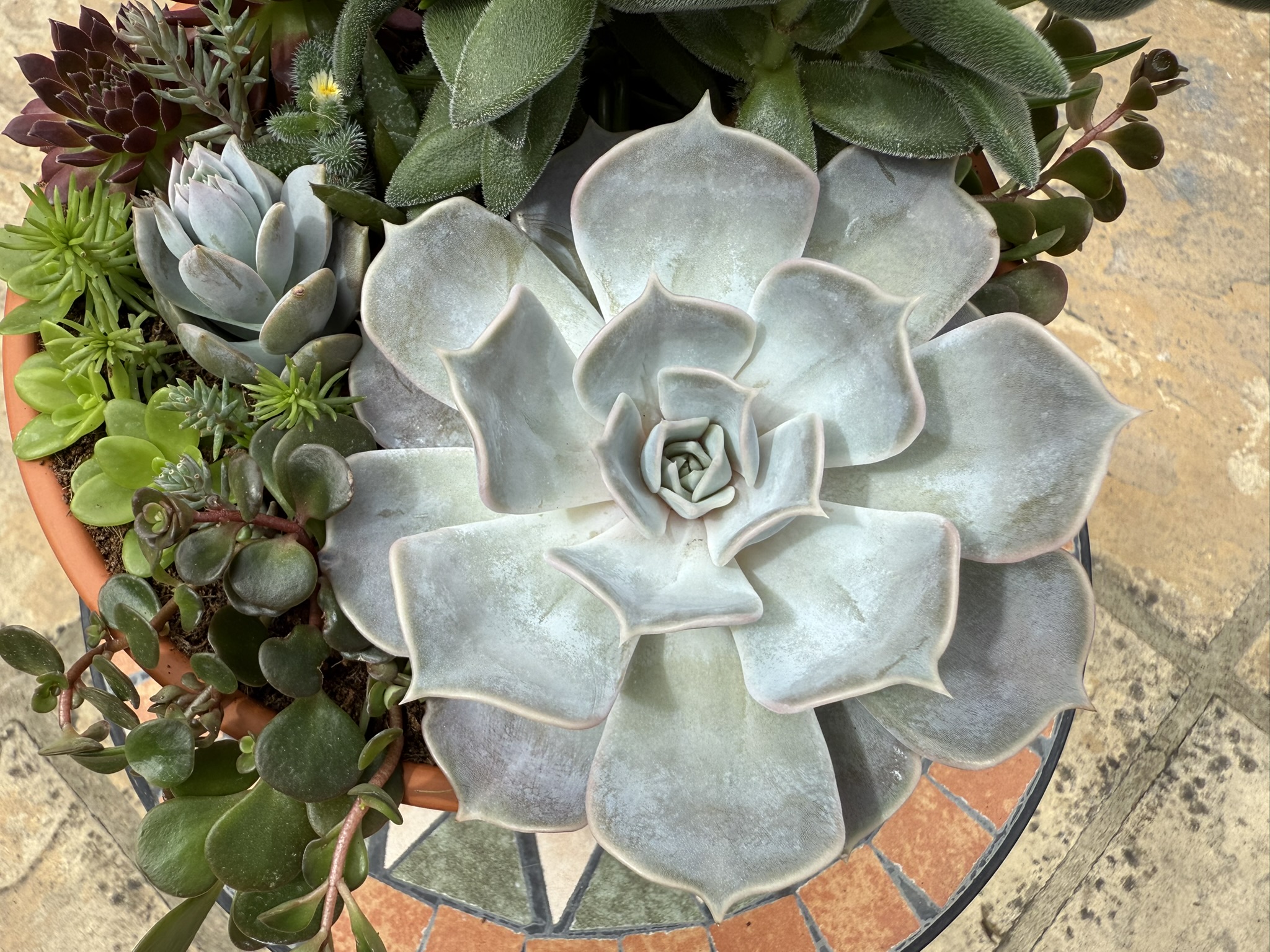
Unpacking – Carefully remove your plant from its packaging. Feel free to tear the bag open rather than sliding the plant out, it’s the safest way to avoid bending or damaging the leaves.
Light – Place your succulent in a bright spot with plenty of indirect sunlight.
If your home gets a little gloomy in winter, a small indoor grow light can be a real help, giving your plants a gentle boost when natural light is limited.
Table arrangements should receive bright, indirect light during the day and can be moved to your preferred display area in the evenings.
Watering – Water sparingly and allow the soil to dry out completely between waterings. Use a chopstick or toothpick to check for moisture if you’re unsure, and avoid letting water sit in the pot or on the leaves.
Plump, firm leaves = well hydrated
Yellowing or dropping leaves = soil too wet or early signs of rot
Wrinkled leaves = your plant likely needs more water
Many succulents go dormant in winter, meaning they take up less water. Water needs also change depending on heating and light levels, cooler, darker rooms mean slower water uptake. It’s always easier to revive a slightly underwatered succulent than one that has been overwatered. Less water, more love!
Temperature – Protect your plant from extreme temperatures. Succulents can go outside in spring and summer, but if the pot has no drainage hole, keep it sheltered from rain. Bring indoors when temperatures drop below 10°C.
Repotting – Repot every 1–2 years, or sooner if the plant begins to outgrow its container. Young plants may need repotting every 6 months. Use a free-draining cactus or succulent compost with added grit or perlite. Dense arrangements may outgrow their pots more quickly, simply repot when things start to feel a little crowded.
If you ever have any concerns about your plant’s health, please get in touch, I’m always happy to help.
Leave a Reply